The fawn response isn’t part of fight, flight, or freeze. Fight, flight, and freeze are things your body instinctually does, whereas fawning is a learned behavior: something you learned to do to prevent a possible threat from escalating or happening in the first place. And learned behavior doesn’t mean chosen behavior.
There’s a version of you that apologizes even before you’ve decided to. You’ll say yes to something when your chest is saying no. You read the room so fast that you don’t even notice you’re doing it anymore.
Oftentimes people think they’re doing this as a form of people pleasing, or being nice. Some people might even tell you it’s the fawn response, and that it’s part of fight, flight, or freeze. But that’s actually not correct.
Fawning is its own unique thing, separate from fight, flight, or freeze. It still helps you in its own way, until it starts getting in your way.
Learned means it’s something you were taught, and maybe now it’s become so habituated you don’t even know you’re doing it. It just happens on autopilot, and super fast.
To understand what I mean when I say fawning is a learned behavior, we have to start with fight, flight, and freeze as instinctual responses.
Fight, Flight, Freeze, and Fawn: How Your Brain Responds to Danger
When we think about instinct, we have to talk about the brain, and there’s something you need to know about your brain. Your brain will prioritize your safety over your happiness 100% of the time. Your brain wants to keep you alive. Happiness would be an excellent goal, but the base-level thing it wants to do is keep you alive.
So in order to keep you alive, it’s going to scan the environment, looking around the world for sources of threat and potential signs of danger, so it can thwart them before they happen.
Yes, I’m simplifying here, and on purpose. PTSD tends to impact people’s memory and executive functioning, so I want to give you this information in a way that’s quick and easy to digest.
If that constant scanning sounds familiar, I go deeper into it in The Difference Between Hypervigilance And Anxiety.
Rest and digest, or what I call Naps & Snacks
If you are in a state of no danger and no threat, your nervous system gets to relax. You go into what’s called the parasympathetic side, where you get to just chill. Some therapists call this rest and digest. I call it Naps & Snacks, because I think we can all universally agree that a good day is a day with naps and snacks.
If you get to just rest and eat and recover, that’s how your nervous system wants to be. It wants to be chilled out. But if danger is around the corner, a switch flips, quicker than you even realize.
What Your Brain Counts as a Threat to Survival
Your brain perceives danger as anything that can jeopardize survivability, cause pain, or impact your social world.
People tend to think trauma is these big, overt events: catastrophes, near-death experiences. But keeping yourself alive is more than just that. It’s about food, water, access to clothing, shelter, all of those things. And if you think about humans, we needed social relationships and getting along together in order to survive.
Before civilization, what kept us alive was food, shelter, water, and clothing. But how did we get those things? Through community, relationships, reputation, and access to resources. This means our emotional needs are just as important to survival as our physical ones.
Today, survival actually looks like healthy relationships, secure housing, stable employment, and food security. The threats look like threats to your life, your livelihood, your career, or your citizenship status. If these things come under threat, or they’re attacked, you’re going to get nervous, or you’re going to go into fight, flight, or freeze as a way to keep yourself safe and protect yourself.
Why relationships are a survival need
Community, relationships, attachments: these are things we need in order to survive. We know from research that people with healthy relationships live longer: people with stronger social relationships have a 50% greater likelihood of survival (Holt-Lunstad et al., 2010). Relationships are also hardwired into us, because we needed them to survive before civilization. Researchers studying how women respond to stress proposed a pattern they called tend and befriend: protecting yourself and your children, and turning toward your social group (Taylor et al., 2000).
We need each other. And if a person I thought I trusted hurts me, that’s terrifying, and that’s painful, and that’s upsetting.
If relationships are meant to keep us alive, but a relationship is what hurts us, that goes against everything our brain knows about survival, and it becomes especially hard to manage. Partner abuse shows up near the top of the research, too. In the World Health Organization’s World Mental Health Surveys, the two experiences with the highest risk of developing PTSD were being raped and being physically abused by a romantic partner (Kessler et al., 2017).
Clinical Reality:
Your brain is designed to value relationships, because they’re part of what keeps you alive.
So relationship harm can be just as harmful, from a trauma perspective, as the events people usually picture when they hear the word trauma.
If you’re reading this and wondering whether what you went through counts, because it wasn’t a catastrophe, that’s the gap I built my checklist for. Does This Count As Trauma? A Checklist for Women Who Wonder if What They Went Through Was “Bad Enough” to Be Called Trauma covers the kinds of harm most checklists ignore, like emotional and psychological abuse and violations of trust, boundaries, and safety. You can find it here whenever you’re ready.
What Happens in Your Body During Fight or Flight
So your brain is just going about life, wanting the parasympathetic nervous system, wanting rest and digest, wanting naps and snacks. Then something happens that is a threat to survivability, a source of pain, or a rupture to your social world. You go into survival mode, a place of wanting to protect yourself, which is called fight or flight.
That’s the first stop, the first option. Instead of being in your parasympathetic nervous system, a switch flips and you go into your sympathetic nervous system. This is exactly what your body does to keep you safe. It flips into that state, and you’re given tons of chemicals that give you energy and put you on high alert.
You get adrenaline and you get cortisol. That switch makes your heart race, makes your breathing go faster, and gets blood out to your muscles (Kozlowska et al., 2015). And it happens within a millisecond. Before you’ve even processed what could be threatening, your brain has decided to put you in fight or flight to protect you.
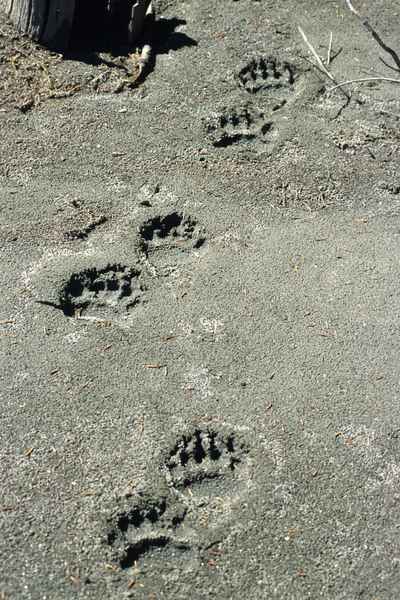
The bear in the woods
Imagine it’s before civilization. You’re out in the woods gathering your nuts and berries, because you want to get back to your cave, light a fire, and ride out the winter with all of your nuts and berries, your naps and snacks. You just want to conserve that energy.
But as you’re out there collecting nuts and berries, you come across a bear in the woods, and your brain goes, “Oh, danger, danger. I need to keep myself safe.” All of this adrenaline and cortisol starts pumping through your whole body, getting blood to your arms and your legs and getting you buffed up.
So you either fight the bear or run from the bear. This is an instinctual response that happens immediately in the face of danger, as a reaction to real or perceived threats.
What Is the Freeze Response?
But what if, when you were walking through the woods, you sprained your ankle? Now you have a sprained ankle, and you come across the bear. You’re not going to be able to outrun the bear, and you’re not going to be able to out-fight the bear.
So what do you do? Well, you don’t actually get to decide what you do.
Your brain kicks in and does a kind of rapid assessment. Fighting: not a good idea, it can worsen the situation. Fleeing: not an option here. If I can’t fight and I can’t flee, my only other option is to freeze. Researchers describe freezing as a state of attentive immobility: your body goes still while your system stays on alert (Roelofs, 2017). Researchers call one kind of this shutdown tonic immobility, and one thing that brings it on is feeling cornered, when neither escape nor fighting looks possible (Kozlowska et al., 2015).
All these other chemicals get released in your body to stop you from feeling potential pain (Kozlowska et al., 2015), and also to immobilize you. You’re given chemicals that immediately paralyze you and silence you, and make it so you feel differently. You don’t feel things the same. You feel foggy, or like you’re walking through mud, so that you can survive the pain that could happen.
Freeze isn't a choice
You go into fight, flight, or freeze because earlier in your life, when you came across whatever your metaphorical bear in the woods was, your brain said, “This is my best option right now.”
And once your brain decides the best option, whether it’s fight, flight, or freeze, it wants to use what it already knows. It starts habitually relying on fight, or on flight, or on freeze. Your brain develops patterns and habits, because these responses need to be quick to call on, in microseconds. Research backs this up for freeze: people with a history of painful life events show more body stilling when they face something upsetting (Kozlowska et al., 2015).
Once your brain is primed for fight, flight, or freeze, it wants to keep going with that in similar situations.
So freezing is not a choice. It’s a reaction to stress, and when I say stress, I mean it can be something stressful, or it can be an event that is potentially traumatizing, potentially harmful.

Is the Fawn Response a Trauma Response?
So where does fawn live? What happens when we fawn?
Fawn isn’t a clinical diagnosis. But it is a word that has caught on, because it describes something very real, something that really does happen.
Everything we just talked about has been researched, studied, and traced. We know the neuronal circuits the chemicals go through, and we can pinpoint the brain structures at play during fight, flight, or freeze. Fawning has never been mapped like that. There are theories about fawning, but nobody has ever been able to prove or demonstrate that there are neuronal circuits to fawning the way there are to fight, flight, or freeze.
One clinical model of defense responses, the defense cascade, lists six of them: arousal, flight or fight, freezing, tonic immobility, collapsed immobility, and quiescent immobility. Fawning isn’t one of them (Kozlowska et al., 2015).
It’s not part of the autonomic nervous system. It’s not an automatic behavior you do instinctually. It is a behavior you learned, because it benefited you by reducing the potential threat of danger.
“Fight, flight, and freeze happen in response to danger. We learn to fawn to reduce the chances of danger.”
|
Fight, flight, and freeze |
Fawning |
|
Instinctual: your body does it |
Learned: you were taught it |
|
Happens in response to danger |
Happens to reduce the chances of danger |
|
A reaction to the bad thing |
An attempt to prevent the bad thing |
|
Traced to known brain circuits and chemicals |
Never mapped that way |
|
Your first stop when there’s a bear in the woods |
Built from a history of what worked |
So fawning happens at a different point in the sequence. But it still happens, and it happens so habitually that it feels like fight, flight, or freeze, because it happens so fast and your brain becomes reliant on it.
Where the Fawn Response Fits: Is People Pleasing a Trauma Response?
Here’s the sequence, and where fawn actually sits in it.
- A bad thing happens, and your body does the instinctual thing: fight, flight, or freeze.
- Afterward, you stay on alert. You’re scanning, you’re managing, you’re heading it off. That’s all the cortisol and the other chemicals coursing through you.
- You start trying to make sense of why this bad thing happened. You might make sense of it as “I made them upset” or “I caused it to happen,” and you blame yourself, or you think you had some role in it.
- You start trying to prevent it. It tells you, “If I just make people happy, if I just control the emotional climate of the room, then they won’t get mad and the bear won’t attack.”
- Either the bad thing happens anyway, or it doesn’t. And if it doesn’t happen, you get this sense of relief: “Oh, good, I prevented it.” That relief feels good, and that relief gets reinforced.
Your brain does step three because it wants some sense of power and control over your world. We as humans would rather blame ourselves for a bad thing happening than feel like it was out of our hands, or out of our control. So if we start thinking “I made them upset. I made it happen. I was supposed to prevent it. I was supposed to stop it,” we feel a false sense of control over it.
I go deeper into why that happens in why self-blame after trauma is so common.
It’s a prevention strategy for pain, not a response to pain.
And the whole system becomes hardwired to think that preventing the bad thing is just as good as reacting to the bad thing. You know that an ounce of prevention is worth more than a pound of cure. Your brain starts thinking, “I would rather prevent bad things than react.” Fight, flight, or freeze is a reaction to the bad thing. Fawning is an attempt to prevent the bad thing.
Fawning is also socially reinforced, which makes it even harder to notice you’re doing it.
Clinical Reality:
Fawning is something you learned to do to prevent danger.
Learning doesn’t mean you chose it. It means it worked. And because it worked, your brain wants to keep redoing it.
That’s a history of what works, not a personality trait of who you are.
🛟 If you're not safe right now, that matters more than anything else in this post.
Use a device he doesn't have access to.
- Text START to 88788 (National Domestic Violence Hotline)
- Chat 24/7 at thehotline.org and press "Chat"
- Call 1-800-799-7233
If you're in crisis, call or text 988.
Can Fawning and PTSD Be Treated?
There’s some good news with all of this: trauma responses, PTSD, and even people pleasing are very treatable, if you have the right treatment.
And the right treatment isn’t just trauma-informed care. A lot of therapists will say they do trauma therapy when what they’re doing is trauma-informed. Trauma-informed just means they know what trauma is. Trauma-focused is the therapy that actually gets in there, into the symptoms, into the strategies, into the learned behaviors, and helps you rewire the circuitry in your brain that is firing incorrectly. Brain imaging research shows that circuitry in PTSD: a meta-analysis of imaging studies found a more active amygdala, the part of the brain that detects threat, and less active medial prefrontal regions, the part that helps regulate it (Patel et al., 2012).
We have three therapies that are proven effective at doing this. One of them is EMDR, another is prolonged exposure, and the third is what I do, which is called cognitive processing therapy.

What recovery does to fight, flight, and freeze
When you actually recover from trauma, what changes inside the brain is the neuronal circuitry that reads the environment to decide whether something’s threatening or not threatening. After the bad thing, your brain starts saying “That’s dangerous. That’s dangerous. That’s dangerous.” as a way to prevent future threat. We recalibrate that, so you only assess for threat when threat is present.
When threat is present, you will still have fight, flight, or freeze, because it’s there to keep you alive. We don’t eliminate fight, flight, or freeze. We recalibrate it so it only fires when there’s actual threat, and not every time there’s stress.
What recovery does to people pleasing
We also work on people-pleasing behaviors through boundaries and relationships, and by looking at the five areas of life that are impacted by trauma: safety, trust, power and control, esteem, and intimacy. We look at all of those areas and teach you the skills to change those learned behaviors, the ones that feel ingrained but can be overridden.
We know recovery is possible because we’ve measured it, and we’ve studied it. In my practice, I use assessment tools with my clients. Every week we do a trauma assessment that scores their progress, so they can see whether they’re getting better or not, and we can fine-tune things for them. And we know it works over the long term: these treatments have been studied at 10-year follow-ups, and people who did the evidence-based treatments maintained their recovery.
The Beliefs That Keep You Stuck After Trauma walks through how that work happens in CPT.
What Trauma Recovery Looks Like
Recovery is peaceful. You’re finally in that parasympathetic nervous system of naps and snacks, and you can just rest and digest.
I tell clients all the time that stability is boring. In recovery from trauma, you’re going to be really bored. You’re not constantly trying to read the room to see who to make happy, because you’re not scared of people’s reactions to you. You understand that their reaction is a reflection of them, and not a reflection of you.
Your self-esteem gets better. Your ability to concentrate and focus at work gets better, and it trickles into all areas of your life.
It changes what you want in relationships and what you value in relationships. It changes what you’ll tolerate in relationships and the people you’ll allow into your life. You set boundaries, and you become more selective about who gets close to you.
If You're Exploring Your Own Story →
If you just recognized yourself in that sequence and you’re wondering what your own bear in the woods was, you don’t have to work that out alone. My free checklist walks through the kinds of harm women go through that often get minimized, with real examples under each one. In a few quiet minutes, you’ll have language for what happened and something concrete you can bring to a therapist if you choose to.
If You're A Clinician Supporting This Work →
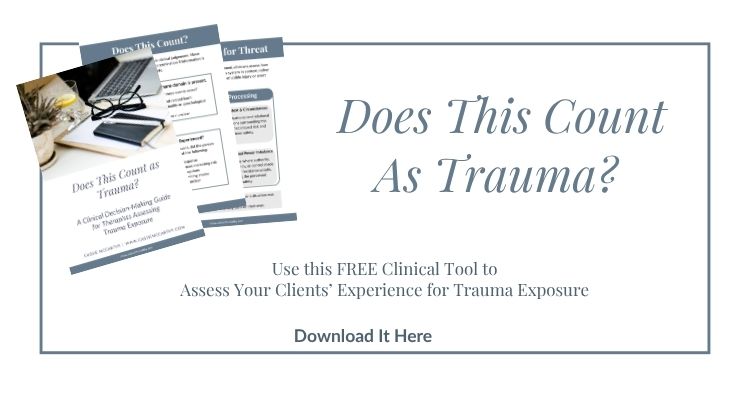
If a client describes her people pleasing as just her personality, the harm underneath it may never have been assessed. My Clinical Decision-Making Guide walks you through how to assess trauma exposure step by step: the decision tree, how to document it, and where it leads on differential diagnosis.
Frequently Asked Questions
Click or tap any question to see the answer. Click or tap again to close.
Is Fawning a Real Trauma Response?
Fawning describes something real, but it isn’t a clinical diagnosis, and it isn’t one of the body’s instinctual defense responses the way fight, flight, and freeze are. It’s a learned behavior: something you learned to do to reduce the chances of danger, usually after something painful happened. Learned doesn’t mean chosen. It means it worked.
What Is the Fawn Response in Fight or Flight?
Many people describe fawn as a fourth response alongside fight, flight, and freeze. But fight, flight, and freeze happen in response to danger, and they’ve been traced to specific brain circuits and chemicals. Fawning happens earlier, as an attempt to prevent danger, and it has never been mapped that way.
Is People Pleasing a Trauma Response?
It can be. After something painful happens, your brain stays on alert and tries to make sense of it, often through self-blame. Keeping people happy can become a way to prevent the next bad thing, and every time it seems to work, the relief reinforces it.
What Are the Symptoms of a Fawning Response?
Common signs include apologizing before you’ve decided to, saying yes when your chest is saying no, and reading the room so fast you don’t notice you’re doing it. Because fawning happens on autopilot, many women experience it as people pleasing or being nice rather than as something they learned after danger.
If This Topic Resonates With You, You May Also Find These Articles Helpful
References:
Holt-Lunstad, J., Smith, T. B., & Layton, J. B. (2010). Social relationships and mortality risk: A meta-analytic review. PLoS Medicine, 7(7), Article e1000316. https://doi.org/10.1371/journal.pmed.1000316
Kessler, R. C., Aguilar-Gaxiola, S., Alonso, J., Benjet, C., Bromet, E. J., Cardoso, G., Degenhardt, L., de Girolamo, G., Dinolova, R. V., Ferry, F., Florescu, S., Gureje, O., Haro, J. M., Huang, Y., Karam, E. G., Kawakami, N., Lee, S., Lepine, J.-P., Levinson, D., . . . Koenen, K. C. (2017). Trauma and PTSD in the WHO World Mental Health Surveys. European Journal of Psychotraumatology, 8(sup5), Article 1353383. https://doi.org/10.1080/20008198.2017.1353383
Kozlowska, K., Walker, P., McLean, L., & Carrive, P. (2015). Fear and the defense cascade: Clinical implications and management. Harvard Review of Psychiatry, 23(4), 263–287. https://doi.org/10.1097/HRP.0000000000000065
Patel, R., Spreng, R. N., Shin, L. M., & Girard, T. A. (2012). Neurocircuitry models of posttraumatic stress disorder and beyond: A meta-analysis of functional neuroimaging studies. Neuroscience & Biobehavioral Reviews, 36(9), 2130–2142. https://doi.org/10.1016/j.neubiorev.2012.06.003
Roelofs, K. (2017). Freeze for action: Neurobiological mechanisms in animal and human freezing. Philosophical Transactions of the Royal Society B: Biological Sciences, 372(1718), Article 20160206. https://doi.org/10.1098/rstb.2016.0206
Taylor, S. E., Klein, L. C., Lewis, B. P., Gruenewald, T. L., Gurung, R. A. R., & Updegraff, J. A. (2000). Biobehavioral responses to stress in females: Tend-and-befriend, not fight-or-flight. Psychological Review, 107(3), 411–429. https://doi.org/10.1037/0033-295X.107.3.411
🛟 Crisis resources
-
- Text START to 88788 (National Domestic Violence Hotline)
- Chat 24/7 at thehotline.org and press “Chat”
- Call 1-800-799-7233 (SAFE)
- Deaf/HoH: videophone 855-812-1001 or IM “DeafHotline” (ASL, 24/7)
- In crisis: call or text 988
Advocates are available in more than 290 languages through an interpreter.

Cassie McCarthy is a trauma therapist who has practiced since 2008, helping women heal from the kind of pain that rarely gets named for what it is. She is rostered in Cognitive Processing Therapy (CPT), is an AASECT Certified Sex Therapist (CST), and practices by telehealth in Massachusetts, Vermont, Virginia, Illinois, and Florida. If you're in one of those states and want to explore working together, you can reach out to schedule a consult.