

“I feel like I’m too much.”
It’s one of the most common things I hear from women with trauma histories. Sometimes they say it directly. Sometimes it sounds like:
“I know I’m being difficult.”
“I know I shouldn’t need this much reassurance.”
“I’m probably overreacting.”
“I don’t want to be a burden.”
“I don’t want to bother anyone.”
No matter how it gets phrased, the message is usually the same: there is something wrong with me because I have needs. There is something wrong with me because I struggle. There is something wrong with me because I react the way I do.
But in my experience, this is rarely a personality trait. It is usually a conclusion. A conclusion that developed after years of trying to make sense of symptoms, reactions, and experiences without understanding the role trauma played in creating them.
Why This Sentence Shows Up So Reliably In Women With Trauma Histories
Many women who have experienced trauma never receive the context necessary to understand what happened to them. Sometimes nobody identified it as trauma. Sometimes other people minimized it. Sometimes they minimized it themselves.
They tell themselves:
“It wasn’t that bad.”
“Other people had it worse.”
“I should be over it by now.”
As a result, they end up judging themselves based on the outcome of trauma without understanding the cause of it. Instead of saying “I’m struggling because of what happened to me,” they say “I’m struggling because there’s something wrong with me.”
Self-Blame After Trauma goes deeper into how that self-talk gets built.
Women also receive countless messages about their needs throughout their lives. Be accommodating. Be easy-going. Don’t be dramatic. Don’t be difficult. Don’t ask for too much.
When trauma enters the picture, those messages often become even more powerful, particularly because interpersonal trauma frequently creates symptoms that show up in relationships. Unlike combat trauma or other impersonal forms of trauma, interpersonal trauma often changes the way people experience trust, safety, vulnerability, closeness, and connection.
And when those changes start affecting relationships, many women conclude: “I must be too much.”
The Trauma Symptoms That Make You Think You're "Too Much"
Many of the experiences women criticize themselves for are actually common trauma responses.
Hypervigilance
You pay close attention to other people’s moods, reactions, and behavior.
You notice shifts that others miss.
You constantly monitor relationships for signs that something is wrong.
Mistrust
You want connection.
But trusting people feels difficult.
You may find yourself questioning intentions, expecting disappointment, or waiting for the other shoe to drop.
Control-Seeking
Control often develops as a way to create predictability.
When life has felt unsafe in the past, certainty can feel protective.
Self-Blame, Guilt, And Shame
Many trauma survivors believe they should have prevented what happened.
Or handled it differently.
Or recovered faster.
Or needed less support.
Irritability And Anger
When your nervous system spends years scanning for danger, patience becomes harder.
Small things can feel bigger than they should.
Clinical Reality:
Not because you’re too much.
Because you’re constantly on guard to protect yourself.
The Specific Beliefs This Feeling Is Built On
One of the things I love about Cognitive Processing Therapy (CPT) is that it helps us identify the beliefs operating underneath symptoms.
Because “I’m too much” is almost never the real belief.
Usually, there are several beliefs underneath it.
Things like:
“If I Put Myself First, I’m Hurting Other People.”
“My Needs Aren’t Important.”
“I Should Have Done More.”
“I Shouldn’t Have Let It Happen.”
“I Am Unlovable.”
“I Must Not Be A Burden.”
“Other People Matter More Than I Do.”

One of the things I love about Cognitive Processing Therapy (CPT) is that it helps us identify the beliefs operating These beliefs often feel true.
Not because they are true.
But because they have been repeated so many times that they become automatic.
How "Too Much" Becomes The Filter Through Which You Read Other People
Once the belief is established, it starts shaping how you interpret the world.
You begin looking for evidence that confirms it.
A delayed text becomes proof somebody is annoyed with you.
A disagreement becomes proof you’re difficult.
A boundary becomes proof you’re selfish.
A request becomes proof you’re asking for too much.
Over time, the belief starts affecting the way you see relationships.
You may find yourself thinking:
“People won’t like me.”
“People are selfish.”
“People can’t be relied on.”
“I’m on my own.”
“I’m not enough.”
The belief no longer stays inside your head.
It starts shaping your entire view of yourself and other people.
How CPT Helps You Challenge The "I'm Too Much" Belief
Cognitive Processing Therapy is specifically designed to help people understand how trauma changes beliefs.
One of the first things clients learn is that trauma doesn’t just affect emotions.
It affects the way we interpret ourselves, other people, and the world around us.
CPT helps you
- Identify the beliefs trauma created.
- Understand why those beliefs developed.
- Recognize how those beliefs continue influencing your life.
- Learn the exact skills therapists use to evaluate and challenge those beliefs.
- Replace outdated beliefs with more accurate and flexible ones.
Most importantly, CPT helps people stop treating trauma-created beliefs as facts.
Because once a belief like “I’m too much” stops feeling true, everything built on top of it starts to shift as well.
What Recovery Looks Like
Recovery doesn’t mean becoming someone with no needs.
It doesn’t mean becoming endlessly independent.
It doesn’t mean never struggling again.
“Recovery means recognizing that having needs does not make you difficult. Having emotions does not make you a burden. Wanting reassurance does not make you needy. Setting boundaries does not make you selfish. They make you human.”
Recovery means learning to see yourself through a different lens.
One that is based on reality rather than trauma.
If you’ve ever found yourself constantly proving your worth through achievement, productivity, or taking care of everyone else, you may also relate to High-Functioning PTSD. Same pattern, different surface symptom.
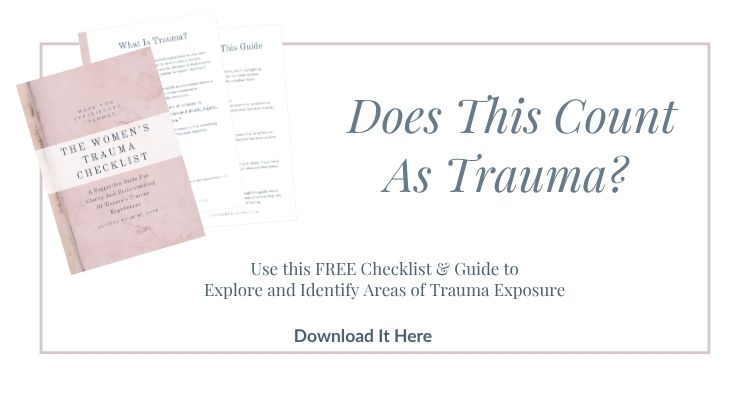
If You're Exploring Your Own Story →
If you’ve spent years apologizing for taking up space and you’re starting to wonder whether the problem was ever you, the Does This Count As Trauma? checklist is a gentler starting point than another round of telling yourself you “shouldn’t” feel this way.
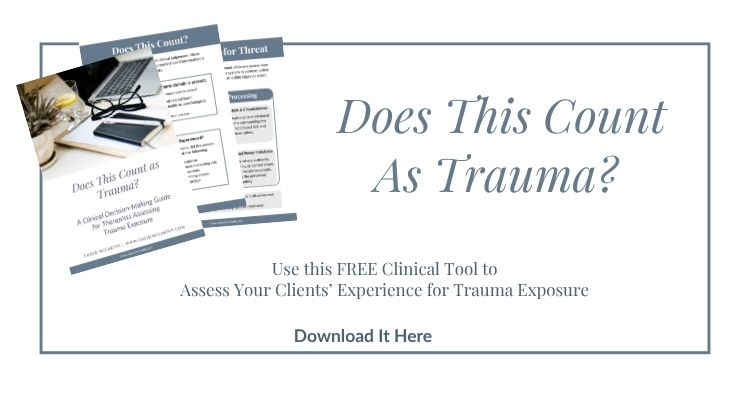
If You're A Clinician Supporting This Work →
If “I’m too much” is showing up in your client’s language and you want a structured way to track the belief layer underneath it, the Clinical Decision-Making Guide gives you the CPT-anchored framework for naming and challenging the specific stuck points driving it.
Frequently Asked Questions
Click or tap any question to see the answer. Click or tap again to close.
Why Do I Always Feel Like I'm Too Much?
Many people who feel this way have underlying beliefs about their worth, needs, or relationships that developed through difficult life experiences. Trauma can significantly influence these beliefs.
Is Feeling Like Too Much A Trauma Response?
It can be. Many trauma survivors develop beliefs such as “I’m a burden,” “I’m difficult,” or “My needs don’t matter,” particularly after interpersonal trauma.
How Do I Stop Feeling Like A Burden?
The first step is understanding where the belief came from. Trauma-focused therapies such as Cognitive Processing Therapy (CPT) help people identify, challenge, and change beliefs that no longer serve them.
Where Does The "I'm Too Much" Feeling Come From?
For many women, it develops from a combination of trauma, self-blame, shame, relationship experiences, and messages they received about their needs and emotions throughout their lives.
If This Topic Resonates With You, You May Also Find These Articles Helpful

Cassie McCarthy is a trauma therapist who has practiced since 2008, helping women heal from the kind of pain that rarely gets named for what it is. She is rostered in Cognitive Processing Therapy (CPT), is an AASECT Certified Sex Therapist (CST), and practices by telehealth in Massachusetts, Vermont, Virginia, Illinois, and Florida. If you're in one of those states and want to explore working together, you can reach out to schedule a consult.
Let's Get Started!
Any info you share with me will not be used for spam, sold, or shared with any third party, ever.


Let's Get Started!
Any info you share with me will not be used for spam, sold, or shared with any third party, ever.