

“Other people have had it worse.”
If you’ve ever wondered whether your experiences count as trauma, you’ve probably said some version of that sentence. Maybe you’ve thought:
“It wasn’t like what happened on TV.”
“It wasn’t violent.”
“I didn’t fight back.”
“I didn’t say no.”
“My childhood wasn’t that bad.”
“Other people went through much worse than I did.”
Many women spend years talking themselves out of their own experiences. Not because nothing happened. But because somebody else’s experience seems more deserving of the word trauma.
The problem is that trauma is not graded on a curve. Your nervous system did not stop to compare your experiences to somebody else’s before responding. And clinically, comparing your pain to someone else’s is often one of the first signs that trauma has been minimized rather than understood.
Why Trauma Is Not Comparative
One of the biggest misconceptions about trauma is that it is determined by magnitude.
The worse the event, the more traumatic it must be.
The smaller the event, the less impact it should have.
But trauma does not work that way.
Trauma is not determined solely by what happened.
It is also influenced by:
- Your age at the time
- Available support systems
- Previous life experiences
- Access to safety
- Existing vulnerabilities
- Protective factors
- The meaning your brain assigned to the event
This is why two people can experience the same event and have very different outcomes.
Trauma is about impact. And impact is always contextual.
The fact that someone else experienced something different does not change the effect your experiences had on you.
Clinical Reality:
Trauma is about impact. And impact is always contextual.
The fact that someone else experienced something different does not change the effect your experiences had on you.
What Magnitude Predicts (And What It Doesn't)
People often assume larger events automatically create greater psychological impact.
Sometimes they do.
But not always.
One of the most overlooked factors in trauma recovery is social support.
In fact, social support is one of the strongest predictors of recovery following traumatic experiences.

And interestingly, the events society most readily recognizes as trauma often generate more support.
People understand them.
People acknowledge them.
People know how to respond.
Interpersonal trauma is different.
Emotional abuse.
Coercion.
Manipulation.
Unsafe childhood environments.
Psychological control.
These experiences often leave people isolated.
They don’t know how to explain what happened.
Other people don’t recognize it.
Sometimes they don’t recognize it themselves.
As a result, they may receive less support despite experiencing significant distress.
How Trauma Comparison Gets Taught
Most people are not born comparing their pain to everyone else’s.
They learn to do this.
Many of the messages we receive about trauma focus on dramatic, visible, or catastrophic events.
Movies.
Television.
News coverage.
Public conversations.
These examples often center around obvious danger and obvious victims.
As a result, many people develop an unconscious hierarchy of suffering.
They begin to believe:
“If my experience doesn’t look like that, it doesn’t count.”
Women are especially vulnerable to these messages.
Many forms of women’s trauma are minimized, misunderstood, or explained away.
Particularly experiences involving:
- Coercion
- Emotional abuse
- Manipulation
- Relational betrayal
- Chronic unsafety
- Psychological control
Over time, minimizing becomes automatic.
Why Women Minimize Trauma and The “It Wasn’t That Bad” Syndrome cover this in depth.
The Specific Things People Say When They're Minimizing Trauma
Trauma minimization often sounds surprisingly familiar.
People say:
“It wasn’t like what happened on TV.”
“I didn’t say no.”
“I didn’t fight back.”
“It wasn’t violent.”
“It wasn’t abuse.”
“I guess I never thought of it as trauma.”
“It wasn’t that bad.”
“Other people had it worse.”
These statements are often treated as evidence.
Evidence that the experience wasn’t significant.
But more often, they are evidence that the person has never been given a framework for understanding what happened.
Why Comparing Trauma Keeps People Stuck
One of the biggest problems with trauma comparison is that it prevents people from asking more useful questions.
The Question Comparison Forces
“Was it bad enough?”
“Do I deserve help?”
“Am I allowed to be struggling?”
The More Useful Question
“How did this affect me?”
“What do I need?”
“Why am I struggling?”
The comparison itself becomes a barrier to healing.
For the high-achieving version of this same gatekeeping pattern, see High-Functioning PTSD
“If your pain never qualifies, neither does recovery.”
What Changes When You Stop Comparing
One of the most powerful moments in trauma therapy is when people stop arguing with their experiences. Not because they suddenly decide everything was terrible. But because they stop needing to prove whether it was. Instead, they begin focusing on impact.
When that shift happens, people can:
What They Finally Get To Do |
What They No Longer Have To Do First |
| Validate their experience | …without needing someone else’s experience to be smaller |
| Name their pain | …without defending why it hurts |
| Access support | …without first proving they deserve it |
| Understand themselves better | …without reducing every struggle to a personal flaw |
| Begin recovery | …without waiting for permission |
Self-Blame After Trauma covers exactly the reduction trap that table is built around.
The Question That Matters More
The most important question is not “Was it worse than somebody else’s?”
The more useful question is “What effect did it have on me?”
From there, the questions that actually move you forward are:
- Did it change how you see yourself?
- Did it change how you see other people?
- Did it change your sense of safety?
- Did it change how you approach relationships?
- Did it change what you believe about your worth?
Those questions tell us far more than comparison ever will.
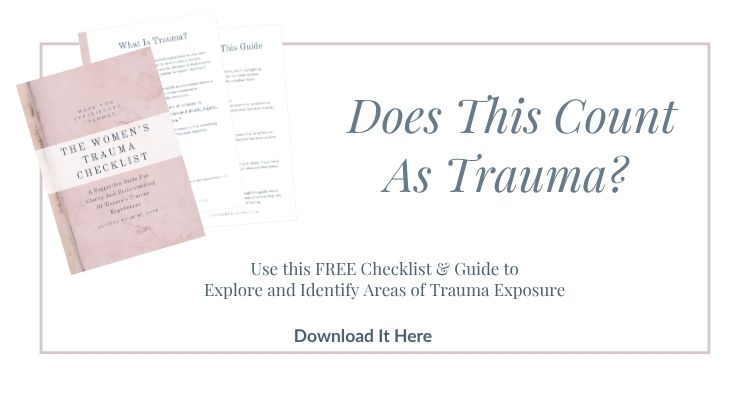
If You're Exploring Your Own Story →
If “other people had it worse” is the sentence you’ve been using to keep yourself out of therapy, the Does This Count As Trauma? checklist asks a different question: what happened to you and how is it shaping you. Not how does it stack up against anyone else.
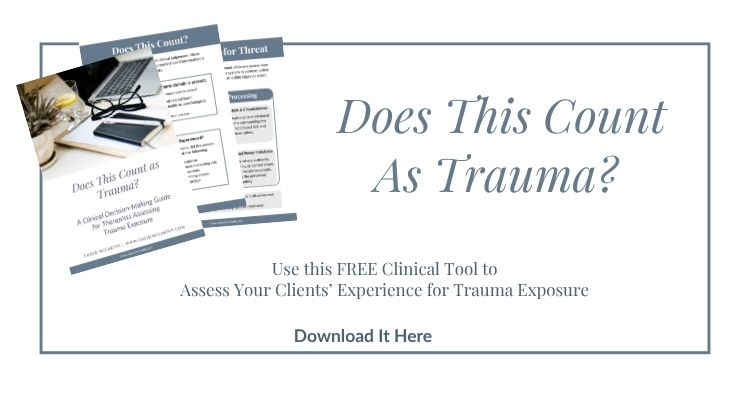
If You're A Clinician Supporting This Work →
If you regularly hear “but others had it worse” from clients you’ve already identified as trauma survivors, the Clinical Decision-Making Guide walks through how to address comparison-driven minimization without invalidating the client’s social context.
Frequently Asked Questions
Click or tap any question to see the answer. Click or tap again to close.
Is My Trauma Less Valid If Other People Had It Worse?
No. Trauma is not a competition. Someone else’s experience does not reduce the impact your experiences had on you.
Why Do I Minimize My Own Trauma?
Many people learn to minimize their experiences because of family messages, social expectations, comparison to others, or difficulty recognizing certain experiences as traumatic.
Can You Have Trauma If Your Family Had Worse Experiences?
Yes. Trauma is not inherited through comparison. The fact that previous generations experienced different hardships does not erase the impact of your own experiences.
What Is Trauma Minimization?
Trauma minimization occurs when people dismiss, downplay, rationalize, or compare away experiences that may have significantly affected them. It is often a barrier to seeking support and healing.
If This Topic Resonates With You, You May Also Find These Articles Helpful

Cassie McCarthy is a trauma therapist who has practiced since 2008, helping women heal from the kind of pain that rarely gets named for what it is. She is rostered in Cognitive Processing Therapy (CPT), is an AASECT Certified Sex Therapist (CST), and practices by telehealth in Massachusetts, Vermont, Virginia, Illinois, and Florida. If you're in one of those states and want to explore working together, you can reach out to schedule a consult.
Let's Get Started!
Any info you share with me will not be used for spam, sold, or shared with any third party, ever.