
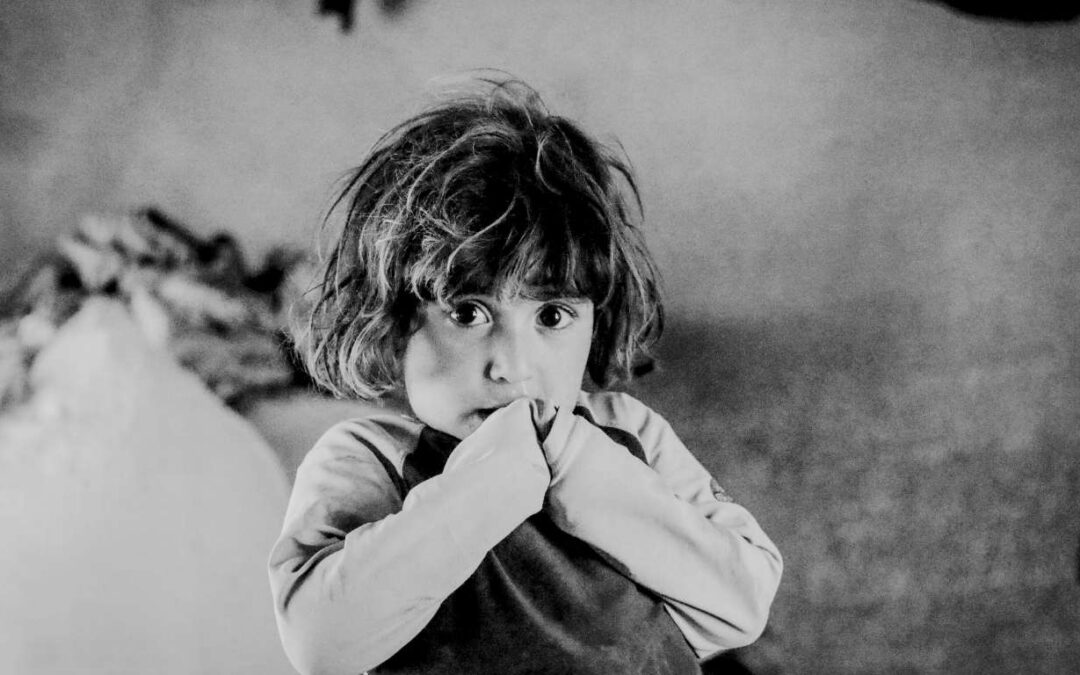
“Nothing really happened to me.”
It’s one of the most common things I hear from women when they first start talking about their childhood. Sometimes they follow it with:
“My parents did the best they could.”
“I wasn’t abused.”
“I had food on the table.”
“It wasn’t that bad.”
Or perhaps most commonly:
“I just never felt safe.”
That last sentence often gets dismissed. As though feeling unsafe is somehow less important than a specific event. As though the absence of safety is simply a smaller version of trauma.
But for many people, that feeling is the trauma. Not because something dramatic happened once. Because something important was missing over and over again.
Why "Nothing Big Happened" Isn't The Right Question
When people try to decide whether their childhood was traumatic, they often focus on magnitude.
Was it bad enough?
Was it serious enough?
Was it worse than what other people experienced?
Clinical Reality:
Trauma is not measured by comparison. It is measured by impact.
A single event can be traumatic. So can years of living in an environment where you never fully felt safe.
Trauma is fundamentally about threat.
- Threat to your safety.
- Threat to your well-being.
- Threat to your ability to survive and function.
- Threat to your bodily autonomy.
- Threat to important relationships.
And while many people think of trauma as something that happens during a specific event, living under chronic threat can be just as impactful. The nervous system does not only respond to attacks. It also responds to anticipation.
When a child spends years wondering:
“What’s going to happen today?”
“Will someone be angry?”
“Will I get in trouble?”
“Will my needs matter?”
“Will anybody help me?”
The brain adapts accordingly.
The Childhood Conditions That Shape An Adult Nervous System
Children are completely dependent on adults.
Their survival depends on the people around them.
That means safety is about much more than physical protection.
Children also need:
- Consistent caregiving
- Emotional support
- Predictability
- Protection from harm
- Adults who respond when they are distressed
- Environments where their needs matter
When these conditions are missing, children still have to make sense of the world.
And they do the best they can with the information available to them.
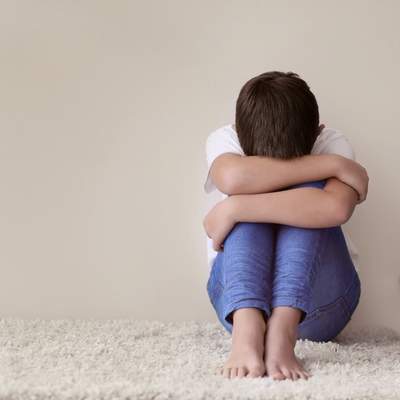
A child might conclude:
“I need to handle things myself.”
“My needs don’t matter.”
“People can’t be trusted.”
“I have to stay alert.”
“I shouldn’t ask for help.”
At the time, these conclusions may be adaptive.
They help the child navigate their environment.
The problem is that many people continue relying on those same conclusions decades later, even when their circumstances have changed.
Why You Can't Remember Most Of It (And Why That Doesn't Matter)
One of the biggest reasons people dismiss childhood trauma is because they don’t remember much of it.
They assume that if it were truly important, they would remember every detail.
But memory doesn’t work that way.
Early childhood naturally limits what we can recall.
Trauma can further interfere with memory formation.
When the brain is focused on survival, detailed memory storage is not always the priority.
Protection is.
As a result, many people remember pieces.
Feelings.
Impressions.
Certain moments.
But not a complete narrative.
The good news is that remembering everything is not necessary for healing.
In fact, recovery is not dependent on uncovering every detail of the past.
The goal is not perfect recall.
The goal is helping the brain update the way it understands safety, danger, relationships, and self-worth.
How An Unsafe Childhood Shows Up In Adult Relationships
Children learn about relationships from the people around them.
They learn:
What to expect from others.
Whether people can be trusted.
Whether their needs matter.
Whether asking for help is safe.
Whether vulnerability leads to comfort or disappointment.
Those early experiences often become the blueprint for future relationships.
As adults, this may look like:
- Difficulty trusting others
- Fear of depending on people
- Hypervigilance in relationships
- Difficulty setting boundaries
- Feeling responsible for everyone else
- Struggling to believe you matter
- Expecting rejection or disappointment
(When Home Wasn’t Safe goes deeper into how these adaptations show up in current relationships, and Self-Blame After Trauma covers the specific self-talk that keeps them locked in.)
The challenge is that these patterns often feel normal.
They have been operating for so long that people assume:
“This is just who I am.”
When in reality, many of these patterns began as adaptations to an environment that felt unsafe.
What Recovery Looks Like When There Was No Single Event
One of the biggest misconceptions about trauma recovery is that there needs to be a specific event to process.
For many people, there isn’t.
There is simply a history of feeling unsafe.
A history of learning beliefs that made sense at the time but no longer serve them today.
Recovery looks remarkably similar regardless of whether there was a single event or a chronic pattern.
People become less hypervigilant.
They trust themselves more.
Relationships feel safer.
Boundaries become easier.
Self-blame decreases.
The nervous system spends less energy preparing for danger.
Most importantly, people stop organizing their lives around lessons they learned in environments that no longer exist.
When To Consider A Trauma-Focused Assessment
It may be worth exploring a trauma-focused assessment if:
- You frequently think, “Nothing big happened, but…”
- You struggle with trust, safety, or vulnerability.
- Relationships feel harder than they should.
- You feel responsible for everyone else.
- You have difficulty relaxing even when things are objectively okay.
- You often wonder whether your childhood affected you more than you realize.
“You do not need a dramatic story to deserve help. You do not need a perfect memory to understand your experiences. And you do not need to prove that your childhood was ‘bad enough’ before exploring how it shaped you.”
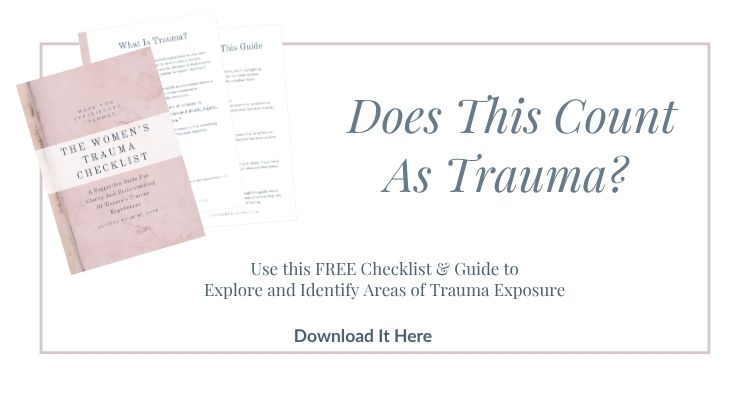
If You're Exploring Your Own Story →
If you’ve spent years saying “nothing really happened” while also knowing something shaped you, the Does This Count As Trauma? checklist gives you a gentler way to look at what was missing as much as what occurred.
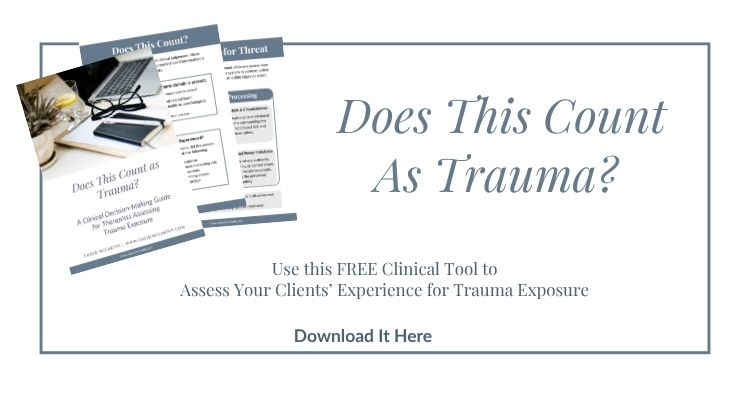
If You're A Clinician Supporting This Work →
If you work with adult clients who can name patterns but can’t name events, the Clinical Decision-Making Guide walks through how to assess developmental trauma without requiring a narrative memory the client doesn’t have.
Frequently Asked Questions
Click or tap any question to see the answer. Click or tap again to close.
Does Childhood Trauma Count If Nothing Big Happened?
Yes. Trauma is not determined solely by the presence of a major event. Chronic exposure to unsafe, unpredictable, neglectful, or threatening environments can have a significant impact on development and long-term well-being.
What Is Developmental Trauma?
Developmental trauma refers to the impact of chronic stress, threat, neglect, or adverse experiences that occur during childhood and affect emotional, psychological, relational, and neurological development.
Can You Have Childhood Trauma Without Remembering Specific Events?
Yes. Many people have limited memories of childhood, and trauma can further affect memory formation. A lack of detailed memories does not mean experiences were not impactful.
Is Feeling Unsafe As A Child Considered Trauma?
For many people, yes. Chronic feelings of unsafety can significantly influence how the brain learns to understand relationships, trust, danger, and self-worth.
If This Topic Resonates With You, You May Also Find These Articles Helpful

Cassie McCarthy is a trauma therapist who has practiced since 2008, helping women heal from the kind of pain that rarely gets named for what it is. She is rostered in Cognitive Processing Therapy (CPT), is an AASECT Certified Sex Therapist (CST), and practices by telehealth in Massachusetts, Vermont, Virginia, Illinois, and Florida. If you're in one of those states and want to explore working together, you can reach out to schedule a consult.
Let's Get Started!
Any info you share with me will not be used for spam, sold, or shared with any third party, ever.