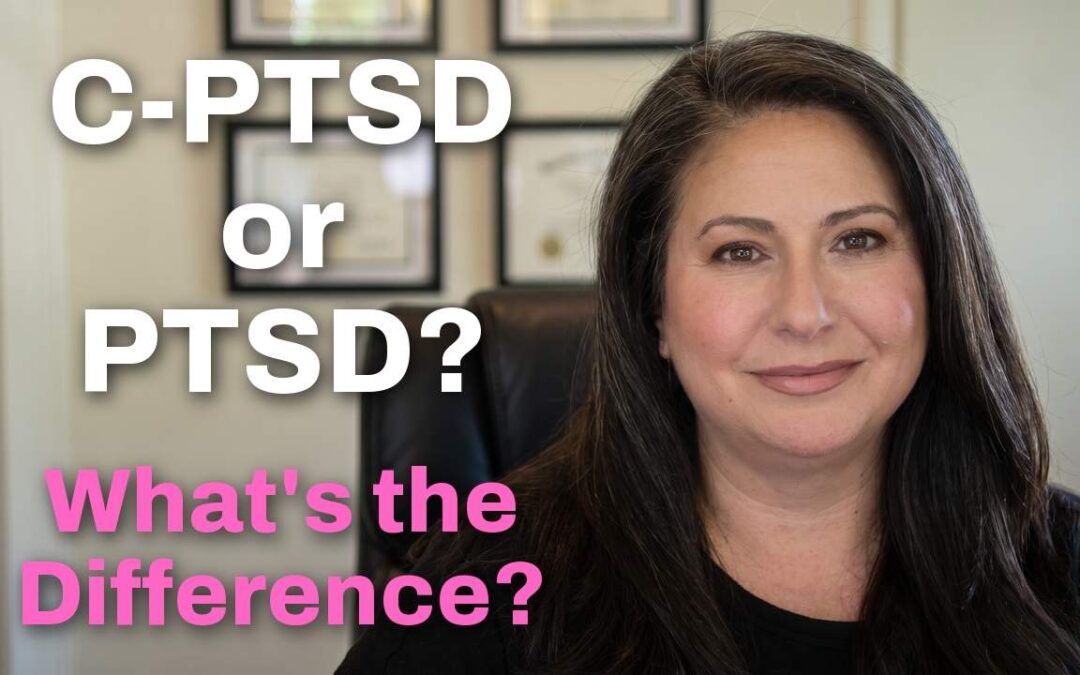
Is there a cure for CPTSD? CPTSD is treatable. The same trauma-focused therapies that treat PTSD, Cognitive Processing Therapy (CPT), Prolonged Exposure (PE) and EMDR, treat CPTSD, and many people finish treatment with their symptoms below the PTSD threshold and keep that recovery for years.
So yes, there is help out there for people with CPTSD. But to get it, you need the right kind of help, and that starts with understanding that a diagnosis is supposed to guide treatment. This is part 3 of a three-part series. Part 1, What Is CPTSD?, covers what CPTSD means and its symptoms, and part 2, CPTSD vs PTSD, covers where the confusion comes from.
Trauma-Informed vs Trauma-Focused Therapy
Remember the women I talked about at the start of this series? They thought they were already doing trauma therapy, it didn’t help, and then they were told, “This isn’t PTSD. It’s complex PTSD.” Here’s what usually happened.
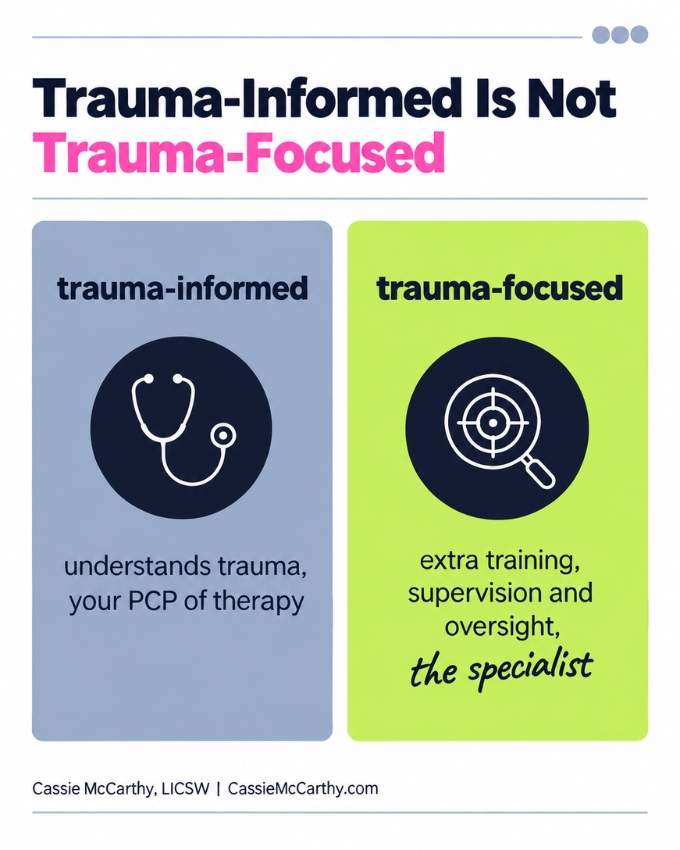
It’s important that you get diagnosed appropriately, and not every therapist is well trained in diagnosing PTSD. Most therapists are what’s called trauma-informed, meaning they understand what trauma is and how it can affect a person. They know how to ground you. But they aren’t necessarily specialized in the field of trauma.
What I often say is that your generalist therapist is like your PCP of therapy. They know a little bit about a lot of things. But if you need to get into the weeds about your trauma diagnosis, your treatment options and how to actually address it, you need a specialist.
A trauma specialist is trauma-focused. Trauma-focused means they went through extensive additional training, supervision and oversight, with proof that they can do the work of treating trauma symptoms. They use a treatment built to treat the PTSD underneath.
Clinical Reality:
The first time medicine studied trauma, it was women’s trauma: prolonged, interpersonal, sexual.
And that research got suppressed and ignored.
| Trauma-informed | Trauma-focused |
| Understands what trauma is | Trained, supervised and overseen in a trauma treatment |
| Can ground you when symptoms hit | Treats the PTSD underneath the symptoms |
| Your PCP of therapy | The specialist |
“Trauma-focused care is a true specialty, not a vibe.”
What Treats CPTSD: CPT, PE and EMDR
What treats CPTSD is the same trauma-focused treatment that treats PTSD. To us, it’s all one.
As of right now, three therapies are top-recommended for treating trauma:
- Cognitive Processing Therapy, or CPT
- Eye Movement Desensitization and Reprocessing, also called EMDR
- Prolonged Exposure therapy, or PE
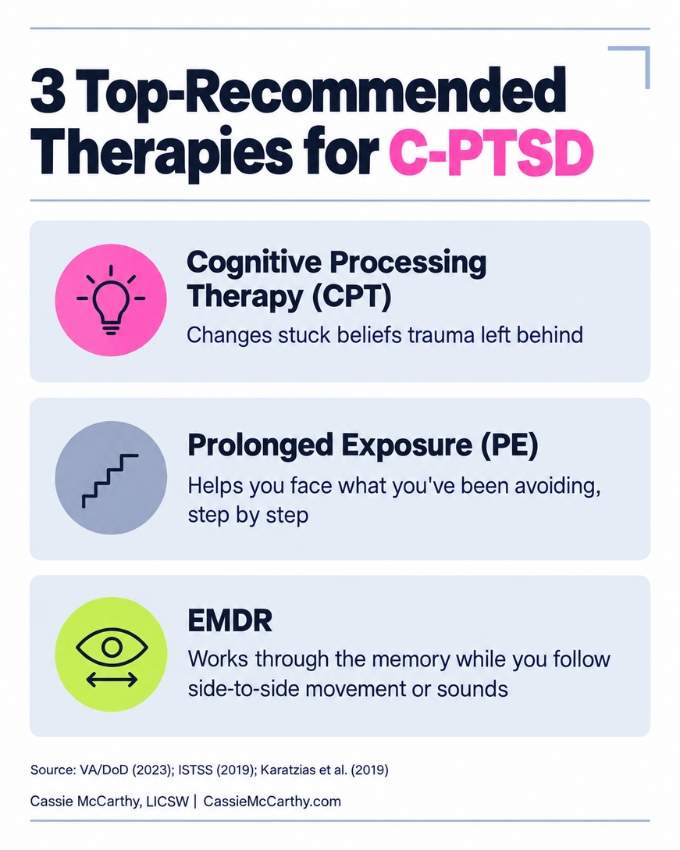
These three produce similar outcomes in relieving the symptoms of PTSD and CPTSD. And we know they do, because when you go through one of them, your therapist uses standardized assessment tools to track your symptoms the whole way through, so we can watch you get better as time goes on. Cognitive therapies are endorsed for CPTSD too (International Society for Traumatic Stress Studies [ISTSS], n.d., p. 4).
CPTSD may take a few more sessions (Billings & Nicholls, 2025, p. 3). And we used to think you needed a long stabilization phase before starting trauma treatment. Now we know to start treatment as soon as possible (Billings & Nicholls, 2025, pp. 3–4).
A lot of therapists say they do trauma therapy because they’re trauma-informed, and that’s not the same thing. Others think they’re doing trauma therapy because they took some other training that says it’s useful for trauma. But without the science behind it, without randomized controlled trials and research showing it’s effective, they don’t actually know whether that therapy works.
What recovery can look like
If you go through one of these therapies, by the end it’s highly probable that your symptoms will be below the PTSD threshold, with Cognitive Processing Therapy and Prolonged Exposure. And if your scores get low enough, you’re likely to hold on to that recovery.
On the PTSD symptom checklist I use, scored from 0 to 80, I’ve seen people start in the 60s and 70s and get all the way down to single digits, and keep it there. Results vary from person to person, but we’ve seen people recover so thoroughly from PTSD and CPTSD that they keep that progress on their own for years after treatment ends.
Clinical Reality:
CPTSD is not a reason to settle for managing symptoms.
The same treatments that treat PTSD treat CPTSD, sometimes with a few more sessions.
Three Myths About CPTSD Treatment
There’s a lot of misinformation about how trauma is treated. Here are three myths I hear all the time.
Myth 1: These therapies only work for single-event trauma
You’ll hear that trauma therapy is only for single-event trauma, and that prolonged trauma needs something else. No. CPT, PE and EMDR have all been studied with people who’ve lived through complex trauma and multiple traumatic events. People with multiple traumas aren’t ruled out of the research. They’re included in it, and we know these therapies work for them.
Myth 2: Trauma needs a body-based, somatic therapy
Another common myth is that trauma and PTSD are physical problems, so you have to do a body-based, somatic therapy, and you can’t use CBT or anything “top down.” Not true. Somatic therapies have not been shown to match the outcomes of CPT, PE and EMDR in clinical trials. Those three relieve PTSD symptoms so thoroughly that people no longer meet criteria for PTSD, and keep those outcomes for years after treatment ends. Somatic therapies can’t show the same.
Myth 3: Only certain kinds of trauma cause CPTSD
Not true. A single traumatic event can lead to CPTSD (Larsen, 2025, p. 3). The traumatic event is a required feature of PTSD, but it isn’t the defining feature. What defines PTSD and CPTSD is how that event changed the person’s life: how they see themselves, their relationships, how they navigate their emotions, their physical state and the world around them.
Here’s what that looks like. After you go through something traumatic, your brain says, I don’t want anything bad to ever happen again, so I’m going to stop any possible sign of threat or danger from getting close to me, and I won’t let it hurt me ever again. Your brain begins to confuse stressful things with threatening things. It starts to think it has to react to everything as a possible threat, because it can no longer tell what is threatening and what isn’t. So you’re constantly on guard, constantly waiting for something bad to happen, in a state of heightened worry that doesn’t let up.
When we say PTSD in the United States, we’re talking about how that plays out for a person in all kinds of different ways. Internationally, PTSD is that state of being on guard about the world around you, and CPTSD adds how you see yourself and how you see other people. PTSD in the US covers both.
Recovery vs Coping
Recovery from trauma, from PTSD and from CPTSD, is very possible. What we used to say, early in my career, was that it was something you had to learn to cope with. And I hate the idea of coping with it. Who wants to cope with feeling triggered? Who wants to cope with feeling traumatized?
We don’t say that anymore. We now know that PTSD and CPTSD are treatable conditions, with long-term recovery.
“Skills can help you cope, but coping is not the same as recovery.”

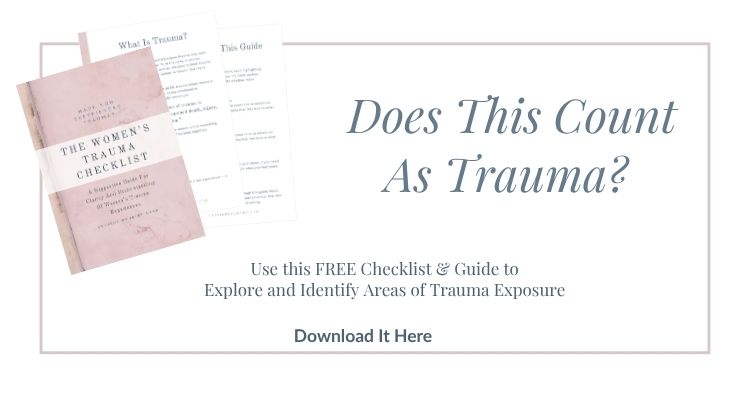
If you think you have PTSD or CPTSD, it’s really important to be seen by a specialist who can assess for it accurately and thoroughly, so you get the help you need. If you’re not sure what you’d even tell a specialist about what happened, that’s what my checklist is for. Does This Count As Trauma? A Checklist for Women Who Wonder if What They Went Through Was “Bad Enough” to Be Called Trauma covers the kinds of harm standard checklists leave out, like emotional and psychological abuse, childhood adversity, and violations of trust. You can find it here whenever you’re ready.
How to Find a CPTSD Therapist
If you’re looking for a trauma therapist, two things matter.
First, make sure they are trauma-focused, meaning they’re trained in Cognitive Processing Therapy, EMDR or Prolonged Exposure. Ask which evidence-based trauma treatment they use.
Second, find out whether they fit your vibe. Having that match is really important. Some people say fit matters more than the method. I think they’re about equal.
What the research shows is that the longer evidence-based care for PTSD or CPTSD is put off, the worse the long-term outcomes (Billings & Nicholls, 2025, pp. 3–4). So we want to get you in with a trauma-focused therapist as soon as possible. When people go through trauma-focused care, we see their PTSD symptoms come down, and their depression and anxiety too. And we want you doing it with a person you click with.
Where to look:
- Psychology Today, or any of the other directories, searched by those three therapies
- CPTforPTSD.com, which keeps a registry of therapists trained in CPT
- the EMDR International Association (EMDRIA), which has a registry of EMDR therapists; if you go with EMDR, look for EMDRIA training, which has the strongest standard for training and oversight
Prolonged Exposure doesn’t have the same kind of registry, and PE therapists are rarer. But it’s a great therapy, so if you can find a PE therapist, I think you’d do really well with them.
CPTSD is not too complex to treat. We have great therapies for it. If you were ever told you were too complicated to treat, or too much, that says more about the treatment you were offered than about you. I talk through all of this in my video on YouTube.
If You're Exploring Your Own Story →
If you’re getting ready to look for a trauma-focused therapist, it helps to walk in with language for what happened. My free checklist walks through the kinds of harm women go through that often get minimized, with real examples under each one. In a few quiet minutes, you’ll have something concrete you can bring to a therapist if you choose to.
If You're A Clinician Supporting This Work →
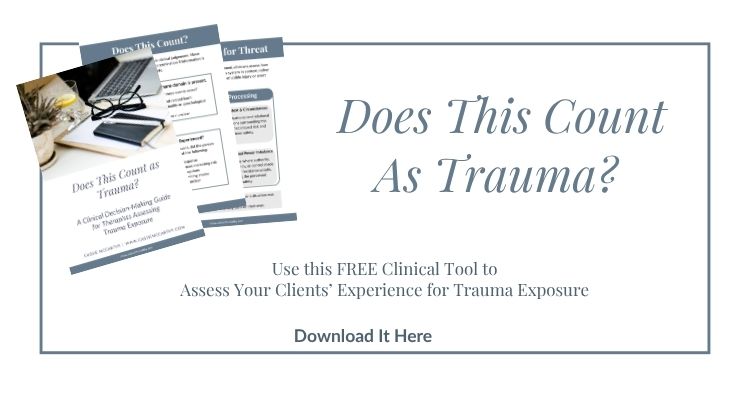
If a client arrives believing she’s too complex to treat, an accurate assessment is the first step back to evidence-based care. My Clinical Decision-Making Guide walks you through how to assess trauma exposure step by step: the decision tree, how to document it, and where it leads on differential diagnosis.
Frequently Asked Questions
Click or tap any question to see the answer. Click or tap again to close.
Is There a Cure for CPTSD?
CPTSD is treatable. The trauma-focused therapies that treat PTSD (CPT, PE and EMDR) treat CPTSD too, and many people finish treatment with their symptoms below the PTSD threshold and keep that recovery for years. It may take a few more sessions than PTSD.
What Is the Best Therapy for CPTSD?
The top-recommended therapies are Cognitive Processing Therapy, Prolonged Exposure and EMDR, the same trauma-focused treatments used for PTSD. The best fit is one of those three with a therapist you click with.
Can Somatic Therapy Treat CPTSD?
Somatic therapies have not been shown to match the outcomes of CPT, PE and EMDR in clinical trials. If you want treatment with the evidence behind it, ask a therapist which of those three they use.
How Do I Find a CPTSD Therapist?
Look for a trauma-focused therapist trained in CPT, EMDR or Prolonged Exposure who also fits you. Search directories like Psychology Today by those therapies, and use the CPT registry at CPTforPTSD.com and the EMDRIA registry for EMDR.
If This Topic Resonates With You, You May Also Find These Articles Helpful
References:
Billings, J., & Nicholls, H. (2025). PTSD and complex PTSD, current treatments and debates: A review of reviews. British Medical Bulletin, 156, 1–13. https://doi.org/10.1093/bmb/ldaf015
International Society for Traumatic Stress Studies. (n.d.). ISTSS guidelines position paper on complex PTSD in adults.
Larsen, S. E. (2025, December 9). Complex PTSD: History and definitions. PTSD: National Center for PTSD.

Cassie McCarthy is a trauma therapist who has practiced since 2008, helping women heal from the kind of pain that rarely gets named for what it is. She is rostered in Cognitive Processing Therapy (CPT), is an AASECT Certified Sex Therapist (CST), and practices by telehealth in Massachusetts, Vermont, Virginia, Illinois, and Florida. If you're in one of those states and want to explore working together, you can reach out to schedule a consult.