
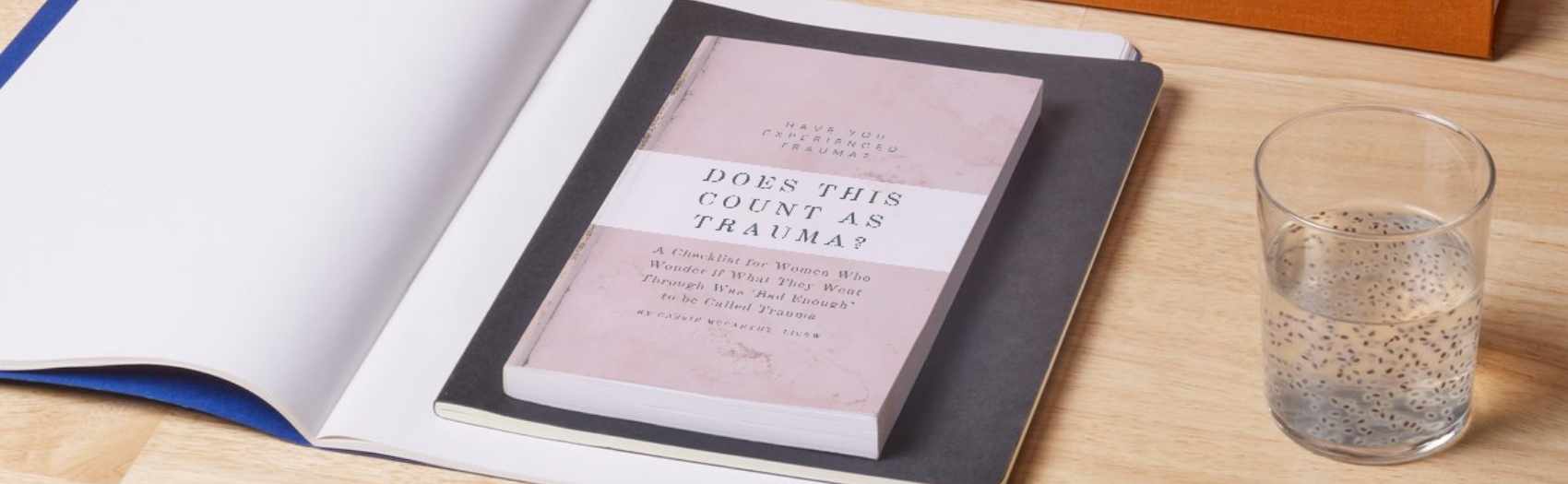
Does This Count as Trauma?
A Checklist for Women Who Wonder if What They Went Through Was ‘Bad Enough’ to be Called Trauma
With this checklist, there’s no need to keep doubting yourself or wondering if your pain “counts”. You’ll gain clarity and validation – in just a few thoughtful minutes.
You Don’t Have to Keep Wondering “Was it Really that bad.”
So many women carry pain that doesn’t fit the mold of what most people picture when they hear the word trauma.
Maybe you’re left thinking, “Well, it wasn’t so bad,” or “Other people have it worse.” Or maybe part of you still wonders if you’re just overreacting.
But deep down, you know something’s wrong — and you just don’t understand what it is.
This Checklist Was Made for that Exact Moment.
So many women carry pain that doesn’t fit the mold of what most people picture when they hear the word trauma.
Maybe you’re left thinking, “Well, it wasn’t so bad,” or “Other people have it worse.” Or maybe part of you still wonders if you’re just overreacting.
But deep down, you know something’s wrong — and you just don’t understand what it is.
With This Checklist, There’s No Need to Keep Doubting Yourself or Minimizing What You Went Through.
You’ll gain:
- Language for what you’ve been through
- Clarity around whether your experiences may qualify as trauma
- A sense of validation — without needing anyone else to co-sign your truth
It only takes a few minutes, and it could change the way you understand your story — and yourself.
Ready to Feel More Clear-Headed — And Less Alone?
Download your free checklist now and take the first step toward trusting your own voice.

Ready?
What You’ll Get From this Checklist
- ☑️ Clarity on whether your experiences were really a form of trauma — even if they were subtle, normalized, or dismissed
- ☑️ Language to describe what you’ve been through, so you can better express your pain, struggles, and needs
☑️ Validation that what you went through was real… and really painful - ☑️ Confidence in your truth, so you can stop second-guessing your story
- ☑️ A gentle and supportive format that takes just a few minutes to complete — no pressure, no overwhelm
- ☑️ A tool designed specifically for women, with the kinds of trauma most checklists ignore
Right Now, You Might Be...
-
Wondering if you’re overreacting to things from your past
-
Telling yourself, “it wasn’t that bad” — even though it really hurt
-
Struggling to explain your pain or make sense of your feelings
-
Carrying around self-doubt, guilt, or confusion about what happened
-
Unsure whether what you went through counts as trauma — and afraid to name it
Now, Imagine If...
-
You had the language to finally describe what you’ve been through
-
You could stop second-guessing yourself and start trusting your own truth
-
You felt grounded in clarity — not just pain or confusion
-
You knew your experiences do matter, even if no one else ever validated them
-
You had a starting point — something simple, supportive, and created just for you
That’s What This Checklist is Here to Give You
It’s not just a download — it’s a step toward believing yourself again.
Get your free copy now and take the first step toward clarity and self-trust.
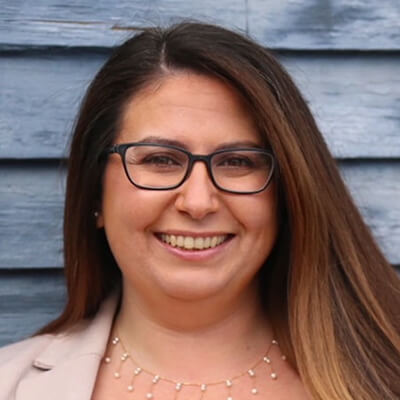
I’m Cassie McCarthy, LICSW — a trauma therapist with over 15 years of experience helping women heal from the kind of pain that rarely gets named for what it is: trauma.
Why I Made This
I’ve worked with so many amazing, intelligent, high-achieving women who are stuck in self-doubt — not because they’re broken, but because no one ever helped them understand what they’ve been through.
They were told to move on, toughen up, or stop being so sensitive. So they buried it. Minimized it. Questioned themselves.
I made this checklist to offer what I wish every woman had: a gentle, validating starting point. A way to say, “Yes, what happened matters.”
Because naming it is often the first step toward healing it.
What’s Inside the Trauma Checklist
This isn’t your average trauma screening tool.
Most tools focus only on the types of trauma most common in men’s lives — and completely miss the kinds of trauma women are more likely to face. Emotional abuse. Boundary violations. Medical trauma. Childhood dynamics that shaped how safe (or unsafe) the world felt.
This checklist was created specifically for women, and it reflects the wide range of experiences that often go unseen, unacknowledged, or dismissed — even in clinical settings.
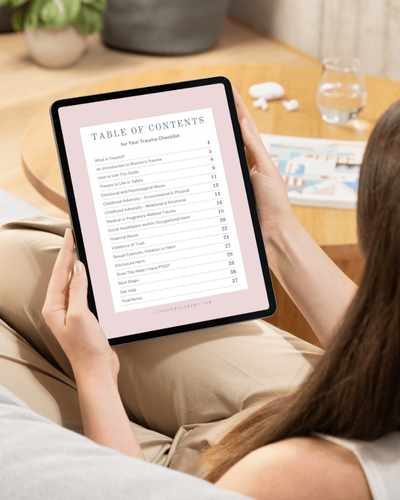
It covers the full range of traumatic experiences that women go through and that often get minimized or overlooked, including:
- Emotional and psychological abuse
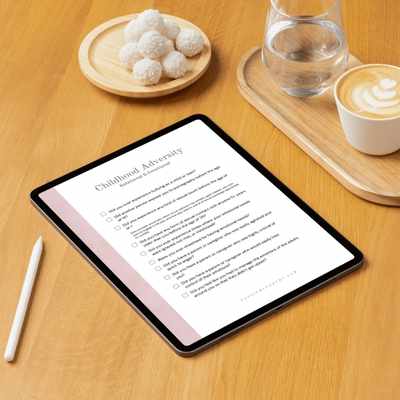
- Childhood adversity — both material and relational
- Medical, pregnancy, or reproductive trauma
- Financial abuse and occupational harm
- Violations of trust, boundaries, and safety
- The pain of being ignored or disbelieved when you tried to speak up
- and more
Ready?
It’s More Than Just a Checklist
This isn’t a cold, clinical screener where you’re left to figure it out on your own.
It’s a starting point — the first steps toward recovering from trauma.
You’ll also find:
-
Brief education on what trauma really is (and why women’s experiences often go unnoticed)
-
A breakdown of trauma categories that go beyond the traditional lens and center the female perspective
-
Language to help you describe what happened — even if you’ve never said it out loud before
-
Supportive next steps if you’re ready to explore healing further
Download the checklist now and take the first step toward understanding your story — and finally naming it for what it is.
Frequently Asked Questions
Click or tap any question to see the answer. Click or tap again to close.
Will this tool diagnose me?
No. This checklist is not a diagnostic tool and isn’t meant to replace professional mental health evaluation. Only a licensed therapist or clinician can provide a formal diagnosis.
What this checklist can do is help you gain language, clarity, and self-understanding — so you can better describe what you’ve been through and begin to make sense of your story.
Are my results private?
Yes. This is a downloadable tool that lives with you. You can fill it out privately, reflect on it in your own time, or choose to share it with a therapist, coach, or trusted support person — but that’s entirely up to you.
Your name and email address may be stored by the email service used to deliver the checklist. If you’re concerned about privacy, you’re always welcome to unsubscribe or use an alternate email address when signing up.
What if I’m just making a big deal out of nothing?
If you’re asking that question, there’s already a part of you that feels unseen or invalidated — and that matters.
Women are constantly told to shrink their pain, toughen up, or stop being so sensitive. This tool exists to push back on that message.
You are not making a big deal out of nothing. If something hurt you, impacted your relationships, changed how you see yourself, or left you doubting your own story — it’s worth exploring. And you deserve to name it.
Who This Checklist Is For
This tool was designed for women who’ve been left wondering if what they went through really counts as trauma.
It’s for you if:
-
You’ve tried therapy before, but it didn’t feel helpful — like it never got to the core of your problems, and you ended up feeling stuck and not seeing any real progress
-
You’re high-achieving on the outside, but constantly second-guessing yourself on the inside
-
You’re just starting to wonder if certain memories, relationships, or patterns might be connected to trauma
-
You’ve felt hurt in relationships — emotionally, sexually, or psychologically — and you’re unsure how to name it
-
You’ve never been able to say what happened out loud, but you’re tired of carrying the weight of it alone
-
You want a gentle, grounded place to start — one that gives you language, validation, and next steps
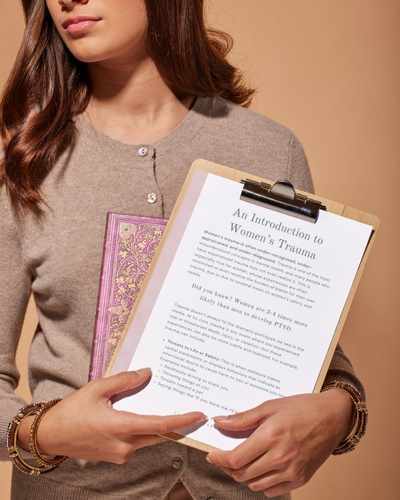
Ready?
Whether you’re brand new to this conversation or have been doing the work for a while, this checklist was created to help you feel more clear, more seen, and more confident in your own truth
How Does this Work?
All you have to do is click the button below and tell us your email address. We’ll then send you an email with the checklist attached as a download.
Inside the checklist, you’ll find a short guide that gently walks you through how to use it — at your own pace, in your own way.
Just enter your email and the checklist will be sent straight to your inbox.
No pressure, no spam — unsubscribe anytime.
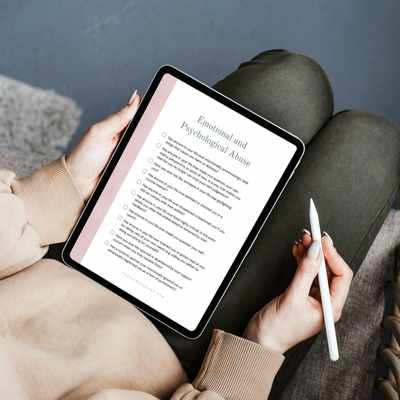
Ready?
Imagine If…
- You stopped questioning whether your pain was valid.
- You finally had the language to describe what happened.
- You felt clear, grounded, and more confident in your truth.
- And you knew where to begin — with real steps toward feeling better.
That’s what this checklist is here to help you do — gently, and on your own terms.
Praise
Cassie’s interactive checklist is a thorough and very easy to navigate tool. It’s most useful for its inclusion of experiences that are frequently minimized or normalized in our culture such as: emotional abuse, birth and pregnancy related traumas and systemic harm. Where it includes a broader range of traumas, it makes space for the complex ways that trauma can show up in women’s lives, and is a great start to working through that trauma towards a path of healing.
I have known Cassie professionally for many years. She is truly a specialist when it comes to helping clients heal from trauma and PTSD. She demonstrates a mastery I have seen only rarely, and combines this with a sense of humor, focus, and assertiveness, which can keep clients on track, and most of all, honest, in their efforts. Trauma is such a widespread phenomenon and yet still an opaque topic for the general public. Cassie will help demystify and explain the nuances and suffering that plague so many people who live with trauma and PTSD. She will work with you and help you develop the skills to help yourself work through your suffering.