

Many women describe the same confusing experience.
Their body is present during sex, but they are not fully there.
They feel numb.
Detached.
Emotionally distant.
Foggy.
Sometimes they go through the motions. Sometimes they feel nothing at all. Sometimes they feel discomfort but cannot access words for it.
Afterward, shame often follows.
“What is wrong with me?”
“Why can’t I just be present?”
“Why do I shut down?”
Disconnection during sex is not a character flaw. It is not a lack of desire. It is not a failure of intimacy.
It is often a learned safety response.
Numbing And Dissociation Are Protective, Not Pathological
The nervous system is built to protect you from overwhelming pain.
When experiences are physically painful, emotionally distressing, violating, or threatening, the brain has options.
It can fight.
It can flee.
It can freeze.
Or it can shut down.
Dissociation and numbing fall into that shutdown category.
Dissociation reduces awareness.
Numbing dampens sensation.
These responses are not conscious choices. They are autonomic protections.
When something feels intolerable, the brain disconnects you from it.
This is not dysfunction.
It is survival.
When Sex Becomes Associated With Harm
Sex does not exist in isolation from context.
If sex has ever been linked to physical pain, emotional betrayal, coercion, obligation, humiliation, or violation, the nervous system remembers.
Even if the harm was subtle.
Even if it was relational rather than violent.
Even if you told yourself it was not serious.
Violation and betrayal are deeply painful experiences. They disrupt agency and safety.
If sex becomes associated with that pain, the brain learns a simple rule.
Sex equals danger.
When that association forms, the nervous system responds predictably.
It disconnects.
Why The Brain Disconnects During Sex
Dissociation is not random. It has a function.
If sex once involved distress, fear, or loss of control, being fully present would have intensified the pain.
So the brain reduced awareness.
Over time, this pattern can generalize.
Even in situations where overt harm is no longer present, the nervous system may still activate shutdown.
You may notice that as soon as sex begins, your mind drifts. Your body feels less responsive. You struggle to stay emotionally connected.
This is not because you are broken.
It is because your nervous system learned that disconnection reduces suffering.

When Obligation And Triggering Collide
For many women, disconnection becomes especially confusing in relationships.
You may believe that sex is necessary to maintain connection. You may fear that refusing sex will create conflict or distance. You may equate availability with being a good partner.
At the same time, sex may feel triggering, upsetting, or painful.
This creates an internal conflict.
You feel pressure to participate.
You feel distress about participating.
When neither option feels safe, the nervous system chooses a third path.
Disconnection.
Dissociation allows you to comply without fully experiencing the distress.
But over time, this reinforces the association between sex and shutdown.
Freeze And Autonomic Protection During Sex
Disconnection during sex is closely related to freeze.
When escape feels unavailable and resisting feels risky, the nervous system immobilizes.
This immobilization may not look dramatic. It may simply feel like heaviness, numbness, or emotional distance.
Freeze and shutdown are not passive states.
They are protective strategies under constrained choice.
Understanding this changes the narrative from self-criticism to context.

If You Are Trying To Make Sense Of Sexual Disconnection
Many women assume sexual numbness means they are damaged, uninterested, or incompatible.
Often, it means something painful was never fully processed.
If you are unsure whether past experiences shaped your current sexual responses, I offer a client-centered resource called Does This Count As Trauma: A Checklist For Women Who Wonder If What They Went Through Was “Bad Enough” To Be Called Trauma. It helps identify where pressure, violation, or threat may have shaped your nervous system’s responses.
Clarity reduces shame.
How I Treat Disconnection During Sex In Trauma Therapy
In trauma therapy, disconnection is not treated as avoidance.
It is treated as information.
Using Cognitive Processing Therapy skills, we identify beliefs that formed when sex was associated with harm, such as:
- “Sex is something I have to endure.”
- “My comfort matters less than keeping the relationship stable.”
- “If I say no, there will be consequences.”
- “My reactions mean I am broken.”
These beliefs are examined in context.
We evaluate what was true at the time.
We identify where choice was constrained.
We separate responsibility accurately.
As beliefs become more accurate, the nervous system recalibrates.
Disconnection decreases when sex no longer feels like a threat.
Reconnecting Through The Four Pillars Of Sexual Reclamation
Reconnection is possible.
It begins with healing the underlying trauma that is driving the shutdown response.
After trauma is processed through evidence-based treatment such as Cognitive Processing Therapy, sexual reconnection becomes more accessible.
From there, integration often involves what I refer to as the Four Pillars Of Sexual Reclamation.
Safety.
Agency.
Clarity.
Choice.
Sexual reconnection is not about forcing presence.
It is about restoring conditions where presence feels safe.
When safety returns, the nervous system no longer needs to disconnect.
For Therapists Working With Sexual Dissociation
For clinicians, sexual disconnection is often misinterpreted as low desire or relationship dissatisfaction.
When dissociation is present, assessment should include relational coercion, violation, and threat-based learning.
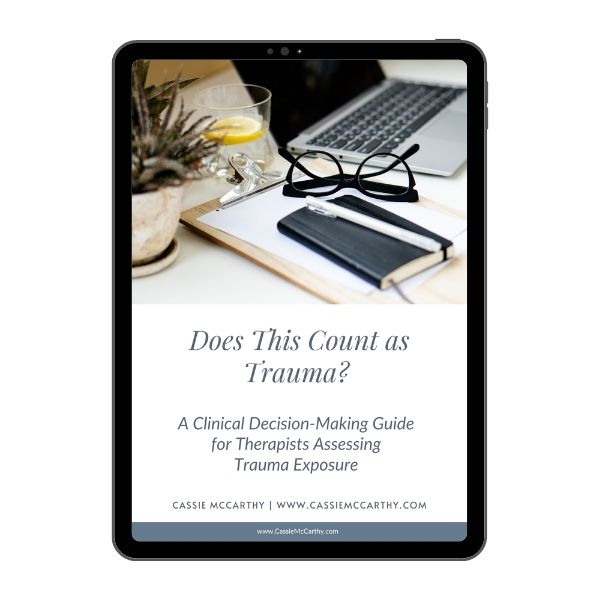
I offer a clinician resource titled Does This Count As Trauma: A Clinical Decision Making Guide For Therapists Assessing Trauma Exposure. It supports clearer identification of threat-based sexual responses and prevents misclassification.
Accurate definitions guide effective treatment.
Looking for Deeper Resources?
My course, When Consent Is Compromised: Applied Clinical Skills for Treating Sexual Coercion is available now. 8.5 continuing education hours* for navigating sexual trauma’s gray areas
Disconnection Is A Learned Protection
If you disconnect during sex, your nervous system learned that full presence was once unsafe.
That learning made sense at the time.
It does not have to remain permanent.
Understanding the protection is the first step toward change.
Trauma Therapy For Women In MA, IL, VA, VT, And FL
If you live in Massachusetts, Illinois, Virginia, Vermont, or Florida, I offer trauma-focused therapy for women experiencing sexual numbness, dissociation, or distress after coercion or violation.
You do not need to push yourself to reconnect.
When trauma is processed and safety is restored, connection becomes possible again.
Disconnection was protection.
And protection can be updated.