

Many women quietly believe this:
If I do not have sex, the relationship will suffer.
If I say no too often, he will pull away.
If I want things to feel better between us, I should just go along.
So they have sex not because they want to.
They have sex to stabilize the relationship.
To prevent conflict.
To reduce tension.
To avoid withdrawal.
To repair a rupture.
This is common.
It is also not consent.
Sex Given To Preserve Attachment Is Not Consent
Consent requires willingness.
Not tolerance.
Not resignation.
Not damage control.
When sex is given to preserve attachment rather than express desire, the nervous system is not operating from freedom. It is operating from threat.
The threat may not be physical.
It may be relational.
Fear of distance.
Fear of anger.
Fear of abandonment.
Fear of emotional shutdown.
When sex becomes a strategy to manage someone else’s reaction, choice is constrained.
And when choice is constrained, consent is compromised.
Relational Pressure And Coerced Intimacy
Relational pressure does not have to sound aggressive to be coercive.
It can sound like:
“You never want me.”
“I guess I just have needs.”
“If we do not have sex, what are we even doing?”
“You know this is important to me.”
These statements may not include threats.
But if they create fear of loss or instability, they function as pressure.
Coerced intimacy is intimacy extracted under relational threat.
The person may say yes.
But the yes is about preventing harm, not expressing desire.
Over time, this erodes internal authority.
Sexual Intimacy Is Not Currency
Sex is not a payment.
It is not a repair strategy.
It is not a bargaining chip.
Sexual intimacy is a form of expression.
It communicates desire, connection, and mutual engagement.
If sex becomes necessary to maintain connection, the real issue is not libido.
It is emotional intimacy.
If the only way a relationship stabilizes is through sexual access, then stability is fragile.
A relationship built on mutual desire does not require one partner to override their body to maintain it.

What Happens When Sex Is Used To Repair
When sex is used to smooth over conflict, a pattern forms.
Tension increases.
Sex occurs to reduce tension.
Temporary closeness returns.
Underlying issues remain.
This reinforces a cycle.
Sex becomes associated with pressure rather than pleasure.
The nervous system learns that sexual access prevents relational instability.
This may work short term.
Long term, it creates resentment, numbness, and disconnection.
A Healthy Partner Does Not Want Sex Without Your Desire
This is a critical distinction.
A healthy partner wants mutual desire.
If someone is aware that you are not interested, not aroused, or not comfortable, and they proceed anyway, that is not neutral.
Sex with someone who is disengaged is not a normal expression of intimacy.
Mutuality matters.
A partner who values connection does not want participation that is rooted in fear or obligation.
If your body feels tense, checked out, or resigned, that information matters.
Why It Feels So Hard To Say No
Many women struggle to refuse sex not because they lack clarity, but because they fear consequences.
If saying no has previously led to:
- Withdrawal
- Anger
- Guilt
- Accusations
- Instability
Then your nervous system learned that refusal is risky.
Going along may feel safer.
This is not weakness.
It is survival under relational pressure.
But survival strategies that require overriding your body create long term harm.
If You Are Questioning Whether This Pattern Is Healthy
Many women minimize relational pressure because it does not involve overt force.
If you have felt obligated to have sex to preserve connection, that experience deserves examination.
I offer a client-centered resource called Does This Count As Trauma: A Checklist For Women Who Wonder If What They Went Through Was “Bad Enough” To Be Called Trauma.
If sexual access was tied to stability, approval, or emotional safety, that context matters.
Clarity reduces confusion.

How I Address Coerced Intimacy In Trauma Therapy
In trauma therapy, sex given to preserve attachment is not treated as a communication issue.
It is treated as a threat response.
Using Cognitive Processing Therapy skills, we examine beliefs such as:
- “If I do not have sex, I will lose him.”
- “My needs are less important than the relationship.”
- “Keeping the peace requires access.”
- “It is easier to go along than to deal with the fallout.”
We evaluate these beliefs based on the actual conditions present.
We clarify responsibility.
We rebuild internal authority.
Healing often involves learning that connection does not require self-sacrifice.
For Therapists Assessing Sexual Obligation
For clinicians, sexual participation motivated by attachment preservation should prompt assessment for relational coercion.
If a client fears instability when refusing sex, that fear deserves clinical attention.
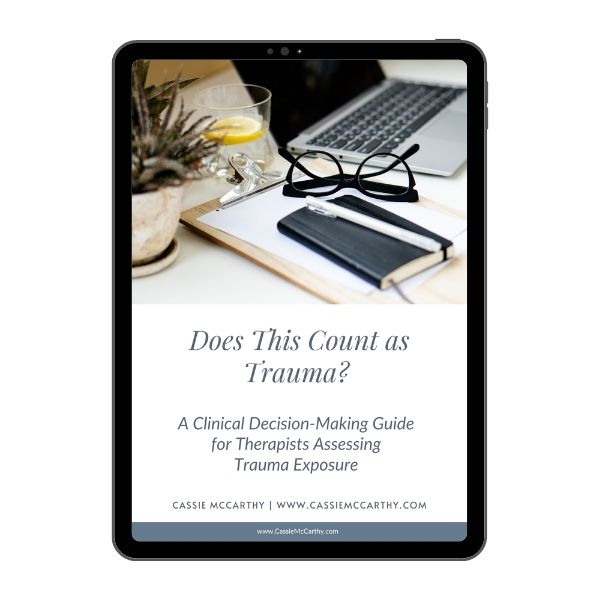
I offer a clinician resource titled Does This Count As Trauma: A Clinical Decision Making Guide For Therapists Assessing Trauma Exposure. It supports accurate identification of relational pressure and coerced intimacy.
Better definitions improve intervention.
You Do Not Owe Access To Maintain Attachment
If a relationship depends on sexual compliance, the issue is not your libido.
The issue is stability.
Sex should express connection.
It should not create it under threat.
You do not owe access to keep someone calm.
You do not owe access to repair conflict.
You do not owe access to prove commitment.
Trauma Therapy For Women In MA, IL, VA, VT, And FL
If you live in Massachusetts, Illinois, Virginia, Vermont, or Florida, I offer trauma-focused therapy for women who feel pressured to provide sexual access to maintain connection.
You deserve relationships where desire is mutual.
You deserve connection that does not require overriding your body.
Sex is expression.
It is not currency.