

Many women assume sexual healing means increasing desire.
They try to want more.
They try to feel more.
They try to be more open.
When hesitation shows up, they override it.
When they want to stop, they push through.
This approach often makes things worse.
Sexual healing does not begin with increasing desire.
It begins with restoring internal authority.
Desire, hesitation, and stopping are all valid information.
If you have learned to ignore those signals, healing is not about becoming more sexual. It is about becoming more accurate.
Why Sexual Healing May Be Necessary
Sexual healing is often needed when sex has been linked to harm.
That harm may have been overt.
- Sexual violence.
- Assault.
- Coercion.
But it may also have been relational.
- Repeated pressure.
- Obligation within a relationship.
- Emotional withdrawal when you said no.
- Being told your discomfort did not matter.
It may also include experiences like birth trauma, medical trauma, betrayal, or relational instability that altered your sense of bodily safety.
When sex becomes associated with fear, shame, pain, or loss of agency, the nervous system adapts.
It may respond with numbness.
Avoidance.
Hypervigilance.
Shut down.
These responses are protective.
But over time, they interfere with connection and pleasure.
Healing requires addressing the protection, not fighting it.
The Foundation Of Sexual Healing Is Safety
Before desire can return, safety must be established.
Not theoretical safety. Experienced safety.
Your nervous system must learn that:
- Your no will be respected
- Your hesitation matters
- Your body is not obligated
- Stopping will not cause punishment or withdrawal
Without these conditions, the nervous system will remain in threat detection mode.
Sexual healing cannot happen in an environment where choice is constrained.
Safety is not something you convince yourself of. It is something your body experiences repeatedly.
This is why trauma treatment often precedes sexual reclamation.
If the nervous system is still responding as if threat is active, attempts at sexual reconnection will feel forced.
Step One: Restoring Choice
Choice is the first pillar because without it, nothing else stabilizes.
Restoring choice means reestablishing that participation is voluntary.
You can begin.
You can pause.
You can stop.
You can change your mind.
And nothing bad happens.
Choice interrupts the association between sex and obligation.
When your nervous system receives consistent evidence that you are not trapped, vigilance decreases.
Choice rebuilds internal authority.

Step Two: Restoring Desire
Desire is often treated as something to increase.
Clinically, desire returns when inhibition decreases.
If sex has been linked to threat, your inhibitory system will override arousal.
Restoring desire means removing pressure, unpredictability, and coercive dynamics.
It means allowing desire to emerge rather than demanding it.
Desire cannot grow in an environment of expectation.
It grows in conditions of responsiveness and safety.
Step Three: Restoring Meaning
When harm has occurred, the meaning of sex often changes.
Sex may become associated with:
- Obligation
- Performance
- Risk
- Self-sacrifice
- Shame
Restoring meaning involves examining these beliefs accurately.
Using evidence-based trauma treatment such as Cognitive Processing Therapy, we evaluate how these meanings formed and whether they remain accurate in the present.
When meaning shifts from survival to choice, the nervous system relaxes.
Sex stops representing danger.

Step Four: Restoring Embodiment
Embodiment is the ability to stay present in your body without needing to disconnect.
If dissociation or numbness developed as protection, embodiment cannot be forced.
It must be rebuilt gradually and safely.
This often begins outside of sexual contexts.
Practicing noticing sensations.
Practicing stopping when discomfort appears.
Practicing staying present without pressure.
Embodiment returns when your body trusts that it can leave if needed.
When exit is always available, presence becomes possible.
Rebuilding Internal Authority
The thread that runs through all four steps is internal authority.
Sexual healing is not about pleasing someone else better.
It is about restoring your relationship with your own signals.
Desire means something.
Hesitation means something.
Stopping means something.
When you treat those signals as valid rather than inconvenient, your nervous system recalibrates.
Healing does not mean you will never hesitate.
It means hesitation will be respected.
If You Are Unsure Whether Trauma Is Affecting Your Sexual Experience
Many women minimize experiences because they did not involve overt violence.
If pressure, power imbalance, betrayal, or coercion were present, your nervous system may have adapted in ways that now affect intimacy.
If you are unsure whether what you experienced qualifies as trauma, I offer a client-centered resource called Does This Count As Trauma: A Checklist For Women Who Wonder If What They Went Through Was “Bad Enough” To Be Called Trauma.
Clarity often reduces shame and confusion.

How I Support Sexual Healing In Trauma Therapy
Sexual healing does not begin with techniques.
It begins with trauma treatment.
Using Cognitive Processing Therapy skills, we examine beliefs that formed under threat and correct responsibility distortions.
As beliefs become more accurate and safety increases, the Four Pillars can be integrated at a pace that respects your nervous system.
Healing is not rushed.
It is structured.
For Therapists Supporting Sexual Recovery
For clinicians, sexual avoidance or numbness should prompt assessment of coercion, violation, and threat-based learning.
Treating desire without addressing trauma often reinforces shame.
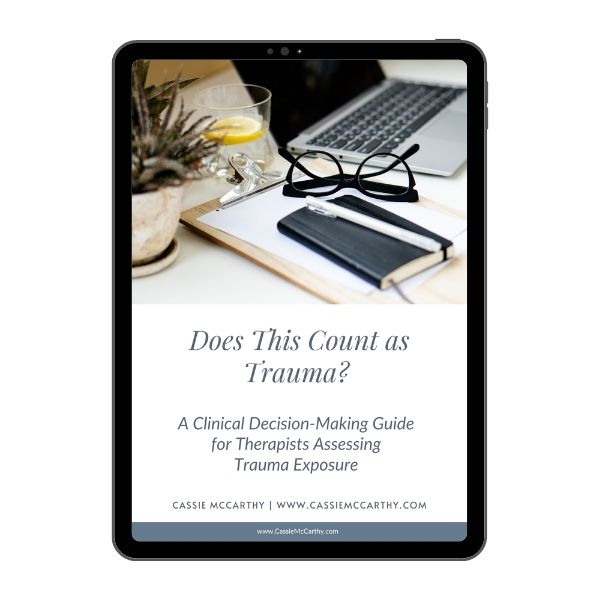
I offer a clinician resource titled Does This Count As Trauma: A Clinical Decision Making Guide For Therapists Assessing Trauma Exposure. It supports accurate identification of relational trauma that may underlie sexual distress.
Accurate formulation guides effective intervention.
Looking for Deeper Resources?
Trauma Therapy For Women In MA, IL, VA, VT, And FL
If you live in Massachusetts, Illinois, Virginia, Vermont, or Florida, I offer trauma-focused therapy for women who want to heal sexually after coercion, violation, birth trauma, or relational harm.
Sexual healing is not about becoming someone new.
It is about restoring your authority over your own body.
And that is possible.